|
|
 |
|
|
 |
 |
 |
 |
 |
 |
 |
 |
 |
 |
 |
 |
 |
 |
 |
 |
 |
 |
 |
 |
|
GOING GREEN???
|
|
|
 |
|
|
|
|
|
|
Going ‘Green’ - what does that mean? For Dr. Bruce Banner, it meant transformation (see left...). Currently, it can mean saving energy, using renewable energy sources, and recycling. It can mean using more earth-friendly materials and fewer polluting chemicals. Whatever it means to you, it is the latest trend, and is important in preserving the earth as we know it, or as we would like to know it.
|
|
|
|
|
|
So how can landscaping help you go green? I’m glad you asked. It can be simple things like planting trees - evergreen to block the wind, deciduous to provide shade in summer but allow the sun to shine through in winter. Or it may involve making landscape beds that attract beneficial insects and birds versus having large tracts of lawn that require mowing and need large quantities of water. It can even be the use of native plants that do not require the additional water and fertilizers that non-natives do.
|
|
|
|
|
|
Finally, don’t forget steps to promote ground water retention. These allow water to be absorbed by and purified through the ground instead of flowing directly into streams, rivers, and lakes.
|
|
|
|
|
|
 |
|
|
So What Can We Do For You ?
|
|
|
|
WATER RETENTION
|
|
|
|
WATER REDUCTION
|
|
ENERGY SAVINGS
|
|
|
|
|
|
 |
 |
|
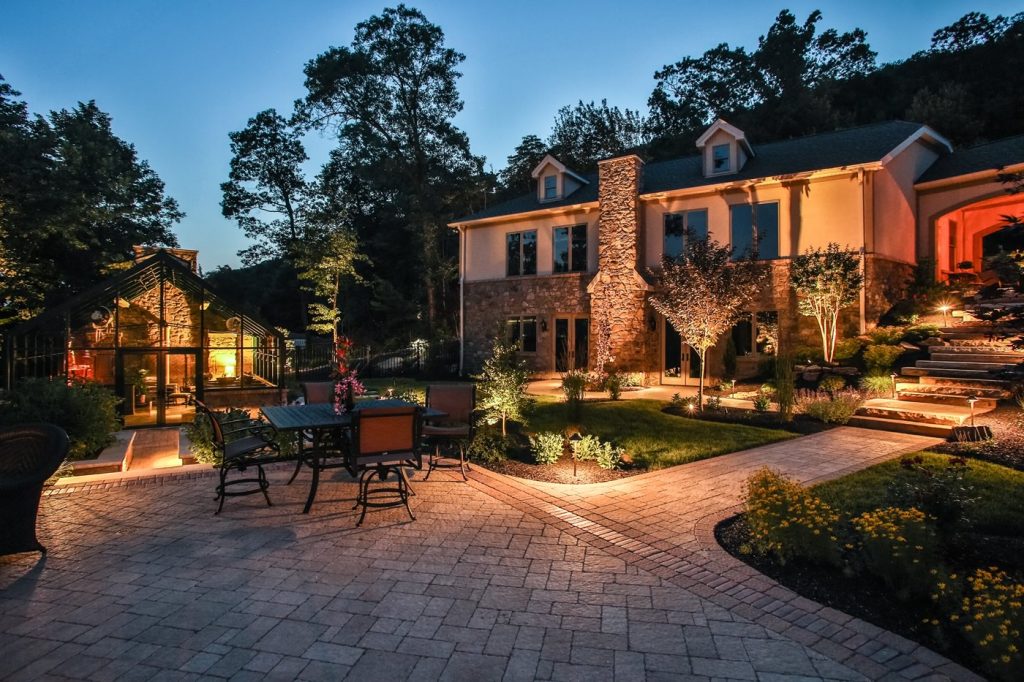
Permeable Pavers - Permeable paving is the use of a paving material that allows water to drain thru or around the paving material directly into the ground. Permeable paving prevents water runoff directly into drains. By allowing water to infiltrate directly into the ground thru permeable paving, many pollutants are filtered out, and sediments from runoff are eliminated.
|
|
|
 |
 |
|
There are different types of permeable pavers. Some styles are true interlocking concrete pavers that have large joints between them. Others allow for grass to grow in the voids. Regardless of type, there’s usually a layer of coarse stone under the pavers that retains the water and allows for slow discharge of water into the soil.
|
|
 |
 |
|
Rain Gardens - Similar to permeable paving, the function of a rain garden is to filter and release water back into the soil instead of allowing it to run-off. Rain Gardens can be installed where parking lots drain, or as more typically seen in residential uses, where gutters/downspouts drain. They can also be installed in swales and other areas that see large amounts of water flow during rainy periods. Rain gardens are typically constructed with a sub-surface area filled with coarse stone for water retention, and a surface that has plants that can withstand periods of high moisture. The surface usually has decorative boulders, rocks, and gravel that prevent erosion.
|
|
|
|